
317L Stainless Steel Sheet and 420J2 Stainless Steel Sheet
Description
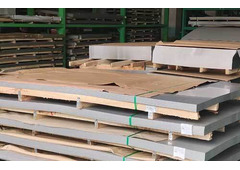
Corrosion-resistant stainless steels are indispensable in locations such as chemical plants, marine settings, and areas exposed to high temperatures. Of all these, 317l Stainless Steel Sheet is one of the most commonly chosen materials due to its extremely low carbon content that leads to a better resistance to intergranular corrosion of the welded parts. Meeting the requirements of ASTM A240 and UNS S31703 standards, these sheets are typically offered in thicknesses from 1 mm to 40 mm and the surface finishes of 2B, No.4 and BA are the most common for cases where mechanical strength and surface integrity are both required. It is through platforms such as pipingmaterial.sa that buyers in the industrial centers of Riyadh and Dammam manage to identify verified suppliers providing material test reports, dimensional tolerances and heat numbers that are fully traceable.
The issue of material selection is often touched upon in terms of pitting resistance, tensile strength, and overall durability in environments rich in chlorides or acids. Austenitic stainless steels that have a low carbon content and include the 317L grade, are very good at retaining their corrosion resistance even after welding, which is why they are the first choice for heat exchangers, chemical tanks, and pressure vessels. Procurement officials in trading centers such as Al Khobar and Jeddah focus very much on the availability of the stock, meeting ASME and EN standards, and surface finish. With the help of digital B2B platforms, it is very easy to get connected to genuine buyers and suppliers who have been pre-qualified, thus effectively supporting project-specific requirements.
420j2 Stainless Steel Sheet is predominantly recognized for its suitability for completing applications where hardness, wear resistance and the ability to retain a sharp edge are of utmost importance. The widespread use of this material is attributed to its martensitic structure that contains a high percentage of carbon. The grade is made according to the ASTM A240 and UNS S42000 standards while the annealed or hardened states are also there for the taking. Online sourcing channels are still making it easier to get to verified suppliers offering detailed specifications certified documentation and reliable supply for industrial fabrication and tooling applications.










You must log in or register a new account in order to contact the publisher
Useful information
- Avoid scams by acting locally or paying with PayPal
- Never pay with Western Union, Moneygram or other anonymous payment services
- Don't buy or sell outside of your country. Don't accept cashier cheques from outside your country
- This site is never involved in any transaction, and does not handle payments, shipping, guarantee transactions, provide escrow services, or offer "buyer protection" or "seller certification"